- +40-700-123-4567
- email@example.com
- 14th Street, New York

Before she could even begin to recover from the trauma of forced displacement, sixteen-year-old Zainab fell victim to child marriage and adolescent pregnancy. Her journey stands as a powerful testament to the lifesaving impact of humanitarian intervention.
In 2025, the ongoing conflict forced Zainab and her family to flee to Shabwah Governorate. That same year, at the very first marriage proposal, her father immediately agreed to her marriage—a decision made out of desperation to relieve a heavy financial burden amid the harsh realities of displacement.
"We fled one tragedy only to walk into another," Zainab recalls. "I was thrust into marriage before I was physically or emotionally ready. At fifteen, I should never have been married off; it shattered my aspirations for the future. Even so, I clung to hope, telling myself that life might somehow improve."
Facing the Uncertainty
Shortly after marriage, severe economic hardship and scarce employment opportunities severely deteriorated the husband's mental well-being, leading to domestic abuse.
Zainab endured the violence to avoid failed marriage that could impose additional financial burdens on her family. Within months, she became pregnant, exposing her to significant physical and mental complications associated with early pregnancy.
Compounded by the fact that this was her first pregnancy, her anxiety regarding childbirth intensified over time, developing into severe distress that threatened both maternal and fetal health.
Being under severe financial constraints, she accessed prenatal care only once. The attending physician advised that a cesarean section might be medically necessary due to her physical frailty—a condition exacerbated by displacement, mental trauma, and acute malnutrition.
Reflecting on her experience, Zainab shared: "I lived in terror and wept constantly, consumed by daily anxiety. Lacking the financial means to pay for hospital care or a C-section, and with nowhere to seek help, I truly believed I would not survive seeing my child."
The Dawn of Safety and Hope
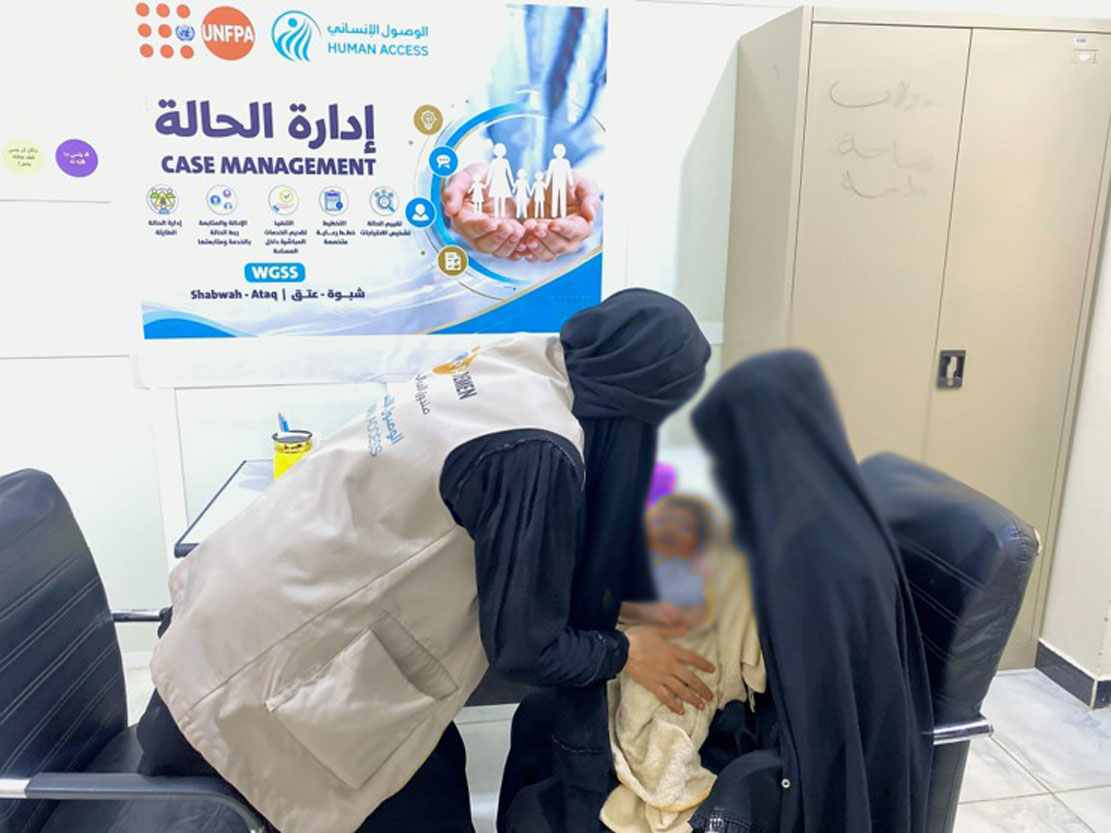
In April 2026, acting on a neighbor’s recommendation, Zainab visited the Safe Space for Women and Girls, operated by Human Access for Partnership and Development as part of the project 'Provision of Livelihood Services for the Most Vulnerable Women and Girls in Yemen,' funded by the United Nations Population Fund (UNFPA).
Describing her initial arrival, Safe Space staff noted: "She reached us in a state of deep physical and emotional exhaustion, carrying visible signs of misery and fear. She was in desperate need of lifesaving humanitarian aid."
The response team acted without delay, initiating mental support to soothe her deep‑seated trauma and delivering a Dignity Kit with essential supplies.
Most critically, Zainab was granted an emergency cash voucher for lifesaving reproductive health services. The assistance funded essential medical visits, tests, medications, nutritional supplements, and complete delivery care kit, ensuring a safe hospital delivery for her firstborn daughter.
Months later, Zainab walked back into the Safe Space cradling her newborn daughter in her arms. Full of gratitude for the life‑changing care she received, she reflected: "I felt truly safe here. This help saved my life and my daughter's. I am determined to give her a future filled with safety and dignity—and I will never let her be married off at a young age."
(Name has been changed to protect identity).
Related articles