- +40-700-123-4567
- email@example.com
- 14th Street, New York

The water crisis in the Yemeni city of Taiz is one of the most severe humanitarian challenges facing its residents; obtaining clean drinking water has become a constant struggle that drains their meager incomes and imposes harsh living conditions.
In the Old Airport area of Al-Mudhaffar District, high prices for commercial water tankers force a large number of families to rely on water distributed by benefactors or humanitarian organizations—delivered via mobile tankers to residential neighborhoods—to meet their drinking and personal use needs.
However, the delivery of this water is irregular and the quantities are limited. Women and children—who bear the brunt of the water crisis—often have to walk long distances to fetch water, a journey fraught with danger.
A Daily Journey of Hardship
Asma Mohammed, a 35-year-old resident of the area, describes the ordeal: "We haven't received water through the public network since 2014, and we cannot afford to buy water because our income is extremely limited. As soon as we hear the sound of charity trucks, we all rush to fill our jerrycans for drinking and cooking. As for washing and bathing, that happens only every two or three weeks, depending on the amount of water we have available."
Ashwaq Ahmed, a 29-year-old mother of five, described the ordeal: "Securing water is one of our biggest challenges. We are forced to carry water on our heads over long distances every day; our pain flows with every drop. I spend hours in a state of anxiety when my children go alone to fetch water, fearing they might come to harm while retrieving it from distant locations."
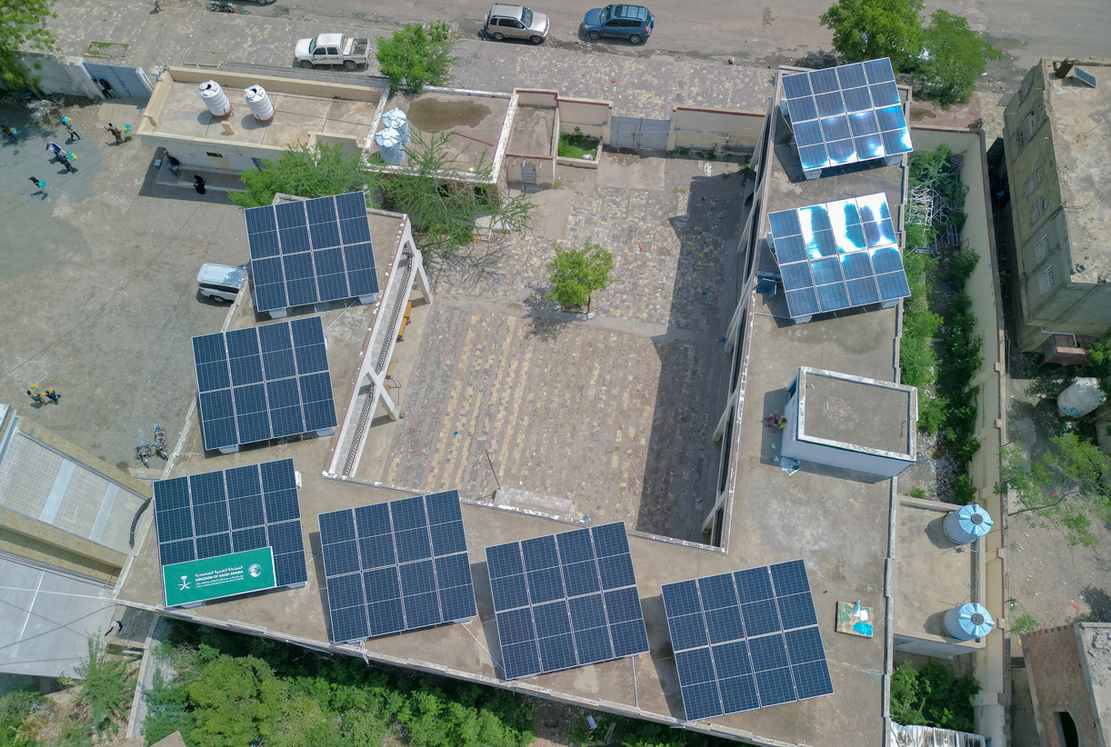
However, the situation has changed in this area—home to over 15,000 people—thanks to the Human Access for Partnership and Development (HUMAN ACCESS) Association. The association drilled the "Al-Hayat School" well and equipped it with a submersible pump system, a comprehensive solar power setup, and a control room, subsequently connecting it to the local water network.
This initiative was part of a project to sustainably enhance safe, clean water sources for the residents of Taiz city, funded by the King Salman Humanitarian Aid and Relief Center (KSrelief). Powering the project with solar energy has improved the continuity of water supply for beneficiaries, enhanced air quality, and reduced operating costs.
A New Lifeline
The project was inaugurated in August 2026 in the presence of the Deputy Governor of Taiz, Engineer Rashad Al-Akhali, who stated: "The project addresses the residents' actual needs and serves an area that had been deprived of water services for over 11 years."
Residents expressed overwhelming joy; among them was 37-year-old Anwar Numan, who said: "It is a long-awaited moment and an indescribable joy. You have restored a lifeline for us, and our dream has finally come true after great hardship. Fetching water used to be a daily nightmare, while a daily bath felt like a luxury."
The project has made a tangible difference in the lives of beneficiary families. They now have access to safe, clean drinking water, which has positively impacted their health and strengthened their resilience to climate change.
Mohammed Farhan, a 40-year-old beneficiary, said: "The project has changed our lives for the better and brought us great relief. It has eased our financial burdens, allowing us to care for our children and rebuild our lives. The struggle of fetching water from distant locations under the scorching sun is finally over."
Ultimately, this project does more than just provide clean water to the Old Airport area; it represents a practical step toward enhancing water security in Yemen—one of the world’s most water-scarce nations. It mitigates health risks associated with water scarcity and contamination while fostering hope, stability, and a dignified life.
(Names have been changed to protect the individuals' identities).
Related articles