- +40-700-123-4567
- email@example.com
- 14th Street, New York

Focus group discussions on community-based alternatives to early marriage and promoting girls' rights, protection, and access to education
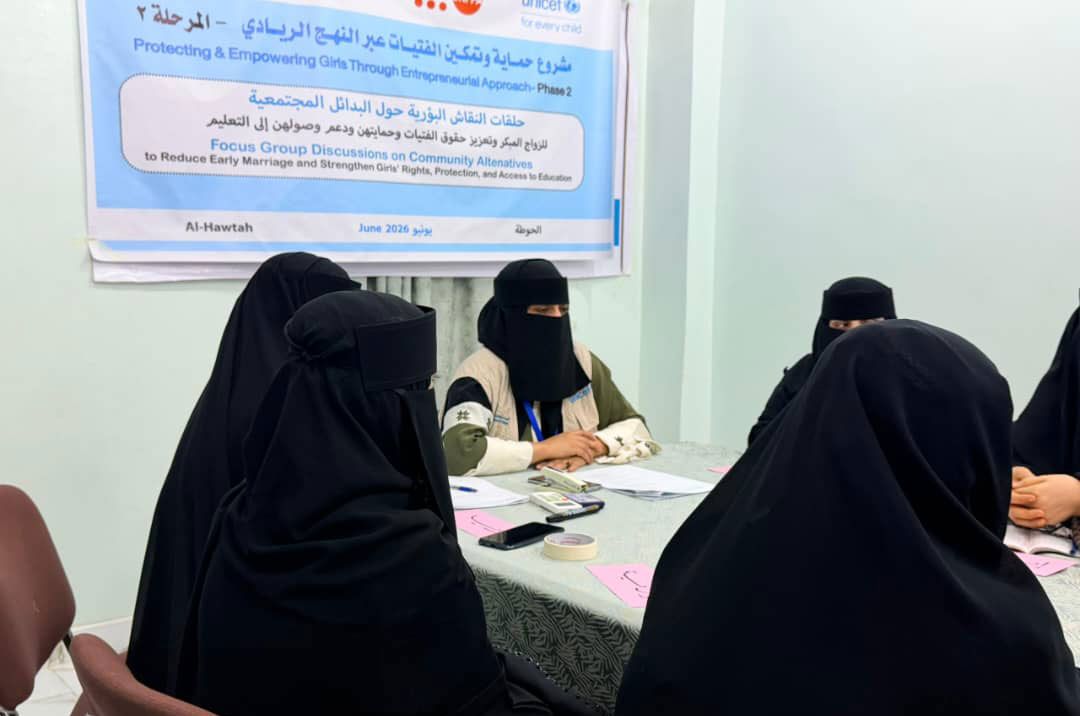
With funding from UNICEF, HUMAN ACCESS in Lahj Governorate organized two focus group discussions on community-based alternatives to early marriage, promoting girls' rights, protection, and access to education. These discussions were part of the second phase of the project "Protecting and Empowering Girls through a Pioneer Approach."
The two sessions, held at the Girls' Training and Empowerment Center in Al-Hawta District, were part of a small-scale qualitative study aimed at identifying community needs for reintegrating girls who have dropped out of school and combating child marriage.
The sessions targeted representatives from various community groups, including teachers, mothers, girls, marginalized fathers, and members of the host community, ensuring a diversity of perspectives and enriching the discussion on issues related to early marriage and girls' education.
The discussions focused on several important themes, including the main causes and factors leading to early marriage in society, the social, psychological, educational, and health consequences of child marriage, the challenges hindering girls' continued or return-to-school education, and possible community-based alternatives and solutions to reduce early marriage. The role of the family, school, community leaders, local authorities, and civil society organizations in protecting girls and promoting their right to education was also addressed.
With 16 participants, many practical opinions and proposals were put forward. Among the most prominent were intensifying community awareness campaigns about the dangers of early marriage, strengthening economic support for the most vulnerable families to reduce the economic incentives for early marriage, encouraging girls to continue their education and reintegrate dropouts into schools, home-based learning, or literacy programs, and providing vocational training for girls who do not wish to continue their education to acquire skills and professions that preserve their dignity and improve their livelihoods and those of their families.
Among the opinions and proposals raised in the two sessions were activating the role of community and religious leaders in combating child marriage, providing psychosocial support services and referrals for the most vulnerable cases, and other qualitative opinions, proposals, and information that will be used in preparing the study. These will support the design of interventions that are more responsive to community needs, contributing to the protection of girls, promoting their rights, and increasing their access to education.
Related articles