- +40-700-123-4567
- email@example.com
- 14th Street, New York

A Lifeline Ensuring Clean Water Access for Nearly 25,000 Displaced People Monthly
Amid climate change and drought, the water crisis in Yemen, one of the world's most water-scarce countries, is escalating to catastrophic proportions, threatening the lives of millions, particularly displaced communities severely impacted by conflict and instability.
Marib Governorate hosts the largest number of internally displaced people in the country, and these displaced people face immense difficulties in accessing clean water, a vital lifeline not only for drinking but also for hygiene, health, and preventing the spread of disease.
To address these challenges, HUMAN ACCESS, with support from the AMUDA Association, is working to improve access to clean water for the most vulnerable displaced people in Marib, as part of the humanitarian response to urgent needs in the water and sanitation sector.
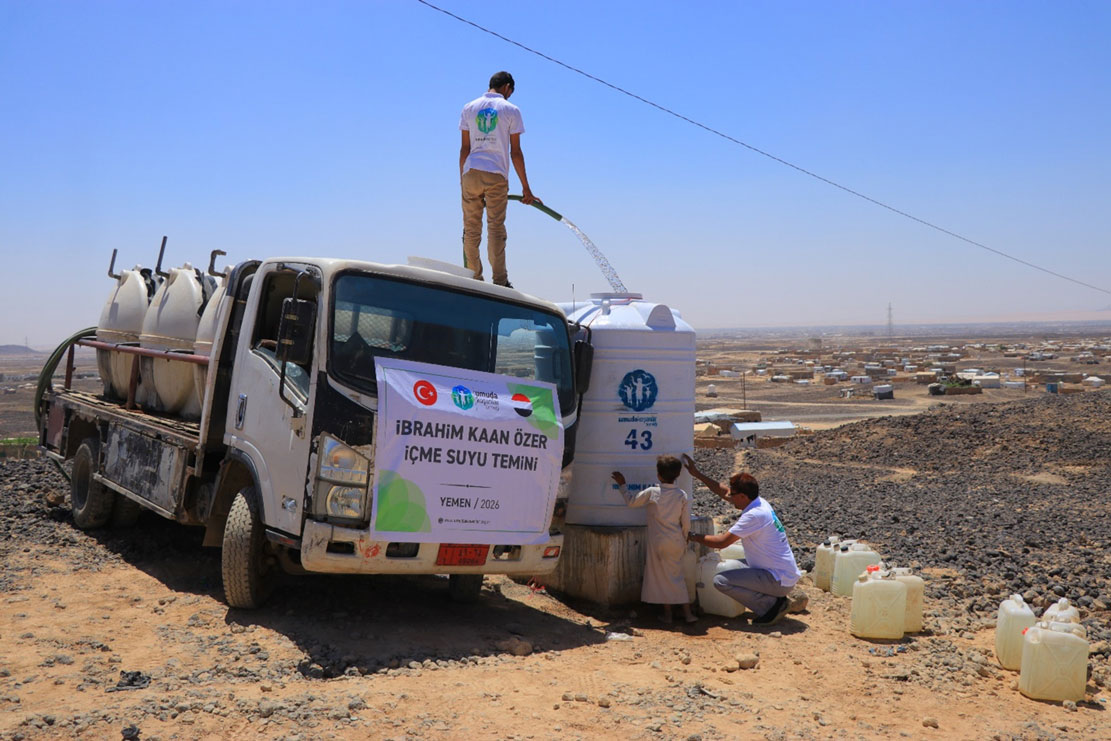
The intervention included the establishment of 50 permanent water distribution points by installing reinforced concrete bases and 2,000-liter plastic water tanks at each point. These points are distributed across five displacement camps: Al-Suwaida, Al-Jufaina, Al-Mathaf, Al-Salam, and Al-Sharika.
Since the beginning of 2025, all the plastic water tanks have been supplied daily and regularly with 100,000 liters of potable water, benefiting approximately 25,000 displaced people monthly. This has helped them maintain their health, care for their families, and rebuild their lives with dignity.
Several displaced beneficiaries expressed their gratitude for this vital intervention, which provides them with a source of clean and safe water. They emphasized that access to potable water was among the biggest challenges they faced before this important intervention, which has contributed to restoring their sense of security and stability.
In a country facing a dual food and water emergency, this intervention is essential to alleviate the suffering of displaced people, enhance their resilience to climate change, and contribute to preventing the spread of diseases and epidemics, while also strengthening resilience in displacement camps amidst one of the world's most complex humanitarian and environmental crises.
Related articles